
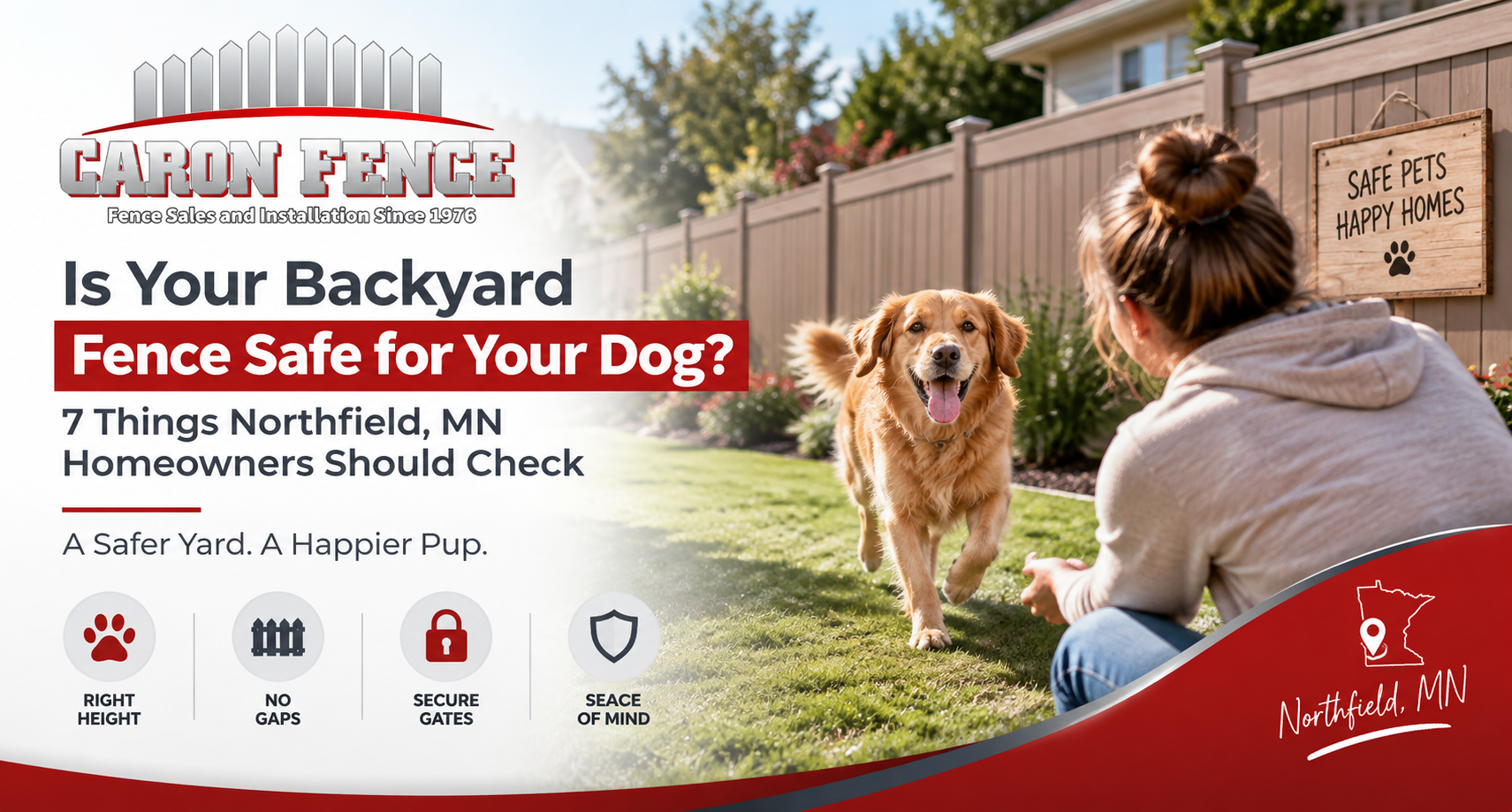
For many dog owners, a fenced backyard provides a convenient place for pets to exercise, play, and enjoy time outdoors. However, simply having a fence does not automatically mean the yard is completely secure. Dogs can jump, dig, squeeze through gaps, push against weak sections, or find their way through a gate that does not close properly.
For homeowners in Northfield, Minnesota, seasonal weather can also affect fence condition over time. Regularly checking your backyard fence can help you identify potential problems before your dog finds them first. Here are seven important areas to inspect.
1. Make Sure the Fence Is High Enough
Dogs have very different jumping abilities. A fence that works well for a small, calm dog may not be appropriate for a larger or more energetic pet.
Consider your dog’s size, activity level, and behavior when evaluating fence height. Some dogs are surprisingly capable jumpers, especially when they see another animal or something interesting outside the yard.
Homeowners planning a new fence can work with an experienced company such as Caron Fence to explore fencing styles suited to their property and everyday needs.
2. Look for Gaps Your Dog Could Squeeze Through
Walk around the entire fence and look at it from your dog’s perspective. Check spaces between fence sections, around gates, underneath panels, and where the fence meets landscaping or structures.
Small gaps can become escape routes, particularly for smaller dogs. A loose board or slightly widened opening may not look serious to a homeowner, but an interested dog may quickly discover it.
Remember that puppies can also fit through spaces that would never accommodate an adult dog.
3. Check the Bottom for Signs of Digging
Some dogs naturally love to dig. If your pet frequently digs near the fence line, inspect those areas regularly.
Look for disturbed soil, small tunnels, or spaces developing beneath the fence. Rain, erosion, landscaping changes, and normal soil movement can also create openings near the bottom.
Rather than waiting until a gap becomes large enough for an escape, address changes when they are still small. Pay particular attention to corners and areas where the yard slopes.
4. Inspect Gates and Latches Carefully
A fence is only as secure as its gate.
Check whether every gate closes completely and whether the latch works reliably. Gates can shift over time, causing them to drag, sag, or stop lining up properly with the latch.
Also consider whether your dog could push against the gate or reach the latch. If children, visitors, landscapers, or delivery workers sometimes enter the yard, make sure everyone understands the importance of closing the gate securely.
A simple gate inspection can prevent one of the most common opportunities for a pet to leave the yard unexpectedly.
5. Choose a Fence Material That Fits Your Needs
Fence material affects privacy, maintenance, appearance, and durability. Wood, vinyl, chain-link, aluminum, and composite fencing can all work differently depending on the property and pet.
For example, a solid fence can reduce outside visibility, which may be useful if your dog becomes highly excited by people or animals passing the property. Other homeowners may prefer a more open design.
Those researching Affordable Composite Fence Installation in Faribault, MN can also consider factors such as maintenance, privacy, long-term appearance, and how the material fits their backyard before making a decision.
6. Check for Damage After Minnesota Weather
Minnesota’s changing seasons can be hard on outdoor structures. Snow, moisture, wind, freezing temperatures, and freeze-thaw cycles can contribute to movement or deterioration over time.
After winter or severe weather, walk along your fence and look for leaning posts, loose boards or panels, damaged hardware, gaps, and gates that no longer operate smoothly.
Do not focus only on obvious damage. Gently checking whether posts and panels still feel stable can reveal problems that are easy to overlook from a distance.
Regular inspections are especially helpful before allowing a new dog or puppy to use the backyard without close supervision.
7. Consider Your Dog’s Individual Behavior
There is no single fence design that works perfectly for every dog.
Some dogs jump. Others dig. Some push against fences, while others become reactive when they can see neighboring pets, wildlife, pedestrians, or vehicles.
Before choosing pet fence installation in Northfield, MN, think about your dog’s size, temperament, habits, and activity level as well as the physical layout of your property.
A fence should be selected around real needs rather than appearance alone.
Make Fence Inspections Part of Your Routine
Pet fence safety is not something homeowners should check only on installation day. Fences change as they age, and so can a dog’s behavior.
Walk the perimeter periodically, test gates and latches, look underneath panels, and pay attention to areas your dog seems unusually interested in. Addressing a loose board or small opening early is usually easier than dealing with a larger problem later.
Final Thoughts
A secure backyard can give dogs valuable outdoor space while providing their owners with greater peace of mind. For Northfield homeowners, the key is to look beyond whether a fence simply exists and consider height, gaps, digging, gates, materials, weather-related damage, and the individual dog’s behavior.
A few minutes spent inspecting your fence regularly can help identify weak points early and keep your backyard a safer, more practical place for your dog to enjoy.